
Large aquatic chelonian
PRE-OWNERSHIP ASSESSMENT and GUIDANCE
This comprehensive guide aims to provide prospective owners and businesses with essential information regarding the responsible ownership of large terrestrial chelonian species. Our commitment to promoting responsible reptile ownership is reflected in the thorough education and preparation of potential owners.
This large species policy has been created to align REPTA and member businesses with government expectations for companion animal sectors as a means of self-regulation. Through self-regulation REPTA can show that the reptile industry is proactively addressing the potential issues, thereby limiting the undue influence of radical animal-rights campaigns.
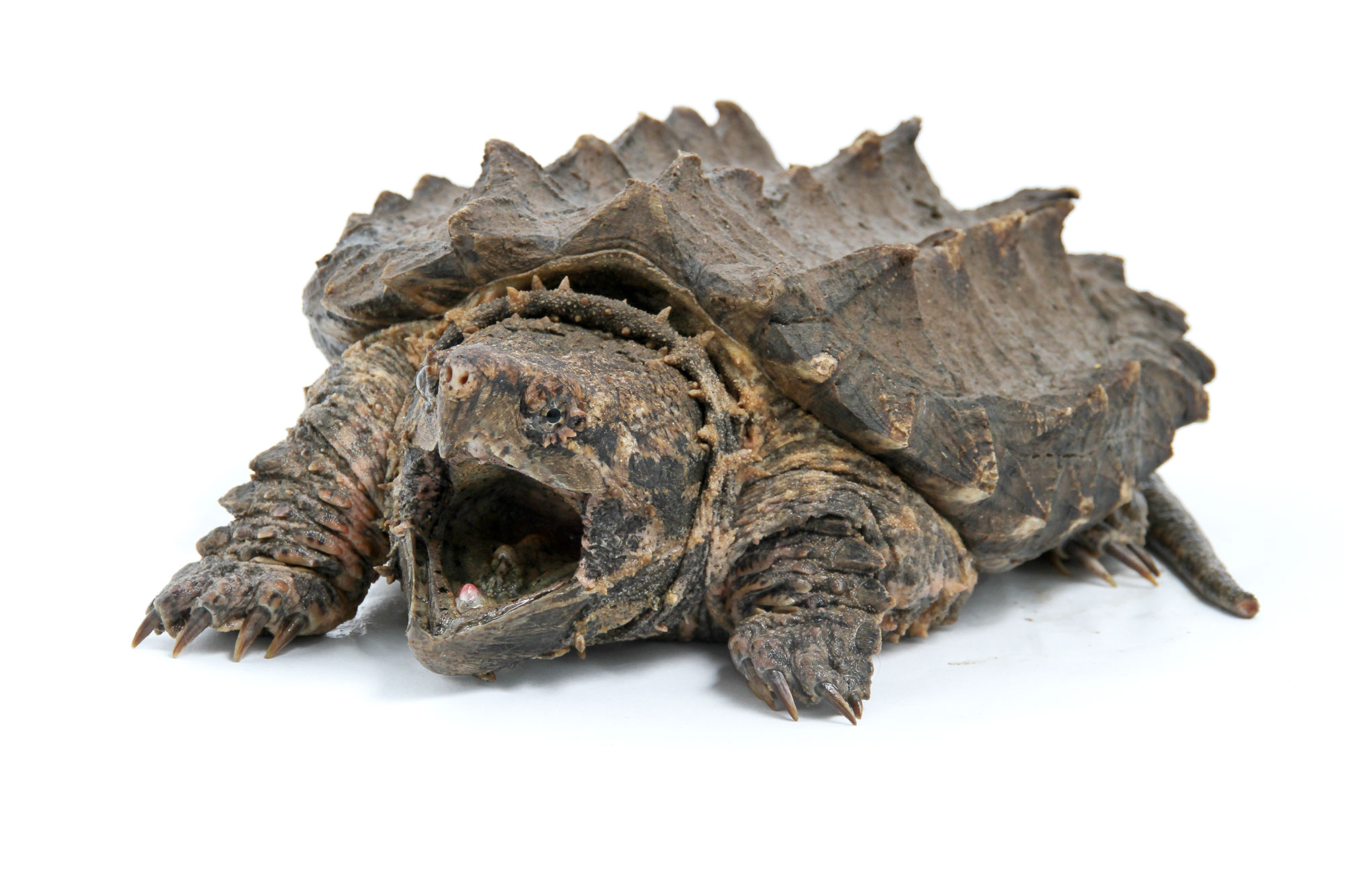
What is a large aquatic chelonian?
A chelonian is a type of turtle or tortoise. Aquatic chelonian is another name for turtles, used to separate them from terrestrial chelonians (tortoises). This guide references large turtle species where adult carapace length may meet or exceed 60cm. Hereafter referred to as ‘large turtles’.
Unlike tortoises, the species within scope are principally aquatic animals. While some may utilise haul-out areas or basking platforms, the overwhelming majority of their lives will be spent within water. As a result, spatial considerations must extend beyond simple floor space and instead account for total aquatic footprint, water depth, swimming area, filtration capacity and the management of large volumes of water.
It should also be noted that certain species fall within the scope of this document not purely on the basis of carapace length, but due to specific risks or husbandry challenges associated with their morphology and behaviour.
Species within scope:
- Indian narrow-headed softshell turtle (Chitra indica)
- Cantor’s giant softshell turtle (Pelochelys cantorii)
- Southern New Guinea giant softshell turtle (Pelochelys bibroni)
- Southern river terrapin (Batagur affinis)
- Alligator snapping turtle (Macrochelys temminckii)
- Fly river/pig-nosed turtle (Carettochelys insculpta)
Additional considerations
While the majority of species included within this document meet the threshold based on adult carapace length, two species warrant specific mention due to the nature of their husbandry requirements, popularity within the hobby and associated risks.
Alligator snapping turtle (Macrochelys temminckii)
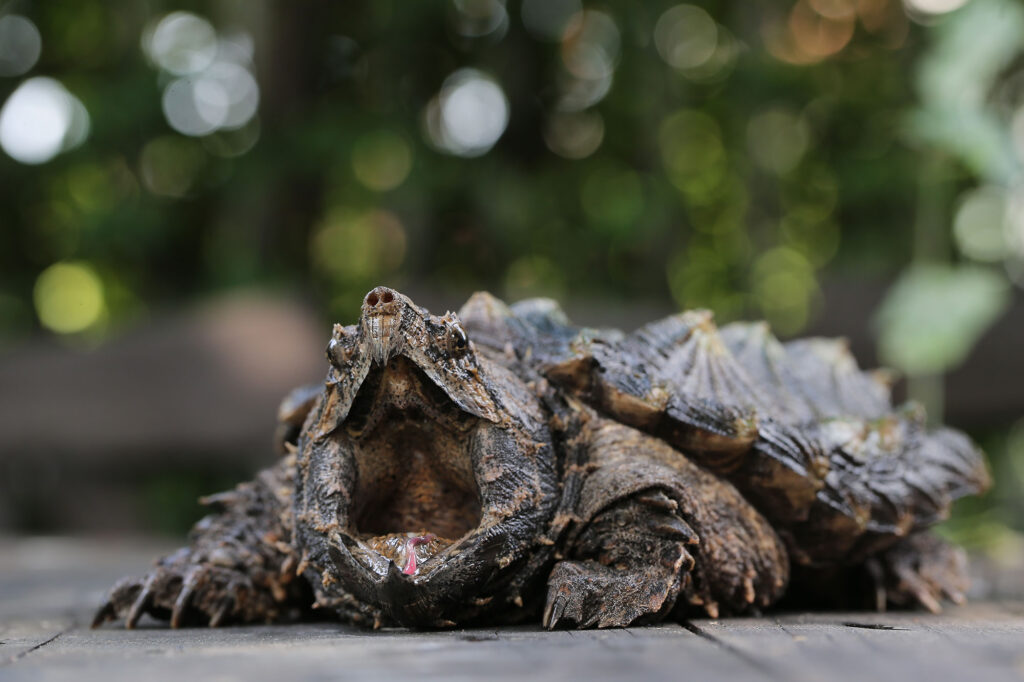
The inclusion of this species is based not solely on size, but on its considerable mass, strength and potential risk to the keeper. While adult carapace length may not always exceed that of the largest softshell species, the overall body mass and bite force of this species presents a significant health and safety consideration.
This is a powerful ambush predator with an instinctive feeding response. Careless handling or complacency during routine maintenance may result in serious injury. For this reason, prospective owners must be assessed not only on their ability to provide adequate space and water quality, but also their understanding of risk management and safe working practices around the enclosure.
Fly river/pig-nosed turtle (Carettochelys insculpta)
The inclusion of this species is based on its unique morphology and behavioural ecology. Unlike many other large turtles, the fly river turtle possesses highly specialised flipper-like forelimbs and is an active, continuous swimmer.
As a result, its spatial requirements are not adequately represented by shell measurements alone. This species utilises the full water column and requires substantial horizontal and vertical swimming space. Enclosures which may appear sufficient based on size alone may be wholly inadequate when considering the animal’s need for sustained movement and exercise.
Failure to recognise this often results in chronic under-provision of space, leading to poor physical condition and reduced welfare outcomes.
Unless breeding either of these species whilst in care is an intended outcome, a permanent haul-out area may not be strictly necessary. However, provision should still be guided by the husbandry needs of the species and the wider enclosure design.
Rationale for REPTA’s guidance
Large turtle species are maintained in captivity within the UK, primarily by specialist keepers. Because of the potential future financial, spatial and energy consumption factors involved in their management, REPTA considers the thorough education and preparation of potential owners to be of great importance as part of our commitment to responsible reptile ownership.
REPTA understands that reptile owners never purchase an animal with the intention to relinquish ownership of their companion animals. However, the species within scope have demanding requirements which are at risk of being underestimated, particularly due to the hidden complexity of aquatic systems.
The rehoming network for reptiles is underdeveloped, and for large turtles it is almost non-existent. The infrastructure required to house such animals means that rehoming options are extremely limited.
REPTA would therefore encourage all responsible companion animal selling businesses to exercise
a thorough pre-ownership assessment. Such an assessment will flag issues regarding long-term spatial provision, water management, energy consumption and safe handling.
This guidance forms part of REPTA’s commitment to proportionate, evidence-led self-regulation within the UK companion animal sector.
Business owner’s duty of care
Ownership of any companion animal is a considerable commitment, and the potential owner should be prepared to thoroughly research a potential new species. Companion animal selling businesses should take seriously their responsibility to provide prepared and competent homes for any animal leaving their care.
REPTA has included supporting information for specialist companion animal selling businesses
to refer to while completing the assessment process. Should businesses require further clarity regarding the assessment process or the supporting information they can contact REPTA at any time.
large TURTLE management
SUPPORTING INFORMATION
1.0 Spatial considerations
Spatial considerations will be a primary focus when considering large turtle management.
Most animals will be purchased as juveniles, where their requirements are modest and easily accommodated. As the animal grows, the requirement for space increases significantly, not just in footprint, but in water volume.
Turtles must be able to swim freely, turn without restriction, surface naturally and access haul-out areas (where appropriate to the species) with ease. The enclosure must therefore be considered as a complete aquatic system rather than a simple container.
To be able to formulate guidance regarding spatial requirements of large turtles REPTA has used a document prepared by the Federation of British Herpetologists:
FBH Code of Practice for recommended minimum enclosures sizes for reptiles
A copy of this document can be found at www.thefbh.org.
The code of practice was ratified by multiple stakeholder organisations including:
BZVS – British Veterinary Zoological Society
CASC – Companion Animal Sector Council
BSAVA – British Small Animal Veterinary Society
As well as a raft of regional and national reptile-owner societies and groups.
1.1 Enclosure sizes
The FBH Code of Practice uses the turtles’ plastron length (PL) and carapace height (CH) to recommend enclosure standards for all turtle species.
- Pool Length: x8 PL
- Pool Width: x4 PL
- Pool Depth: x4 CH
Even if we use an example of a modest size juvenile turtle with a PL of 20cm and a CH of 7cm the recommended size of pool may surprise you. (See table at the bottom of this page.)
The potential owner must consider:
- Length and width of the water body
- Depth of water
- Total water volume and resultant weight of water
- Access to haul-out or basking areas (if appropriate)
- Turning space for the adult animal
In many cases, adult accommodation will move beyond conventional aquaria into indoor ponds, custom-built tanks or room-scale enclosures.
| PL | CH | POOL LENGTH | POOL WIDTH | POOL DEPTH | LITRES | KG |
|---|---|---|---|---|---|---|
| 20CM | 7CM | 160CM | 80CM | 28CM | 358 | 358 |
An example of a recommended pool dimensions/capacity. See the Pre-ownership Assessment Form for more size guidance.
1.2 How this relates to the family home
The information contained in the supporting information section pertains only to adult large turtles. Using the previous example of an adult turtle with an PL of only 50cm and CH of 17.5cm will mean the recommended adult enclosure size is 400cm in length (13ft) 200cm in width (6.5ft) and 70cm (2.25ft) in depth. Water weight alone would exceed 5 tonnes.
Due consideration must be given to placement within the home. If purchasing a baby or juvenile turtle, care must be taken to ensure an adult enclosure of such proportions can be accommodated.
1.3 Space availability long term
Consideration of the future and changes that may take place in the family home is paramount. Is your current employment secure? Is there any chance that you may have to downsize or modify your living arrangements? Is your family still growing and the space allotted for the adult turtle potentially be needed for the arrival of new family members? If there is the potential for such an occurrence, is there available space outside for an ex-situ enclosure? If there is the reasonable potential for such situations to arise and there is not the availability of ex-situ space a potential owner should consider if they can provide for the long-term management of a large turtle.
1.4 Custom enclosure construction
Large aquatic systems require careful planning. Consideration must be given to waterproofing, drainage, access, and long-term durability. Failure of a large water-holding system may result in significant damage to the property. If glass is to be used rather than a lined sunken pond, costs may rapidly escalate. The width of glass must increase proportionately to be able to safely take the water load and pressure it creates. Glass is also heavy and will add to the already considerable weight of water present. Consideration should also be given to safe physical access for routine cleaning, maintenance and recovery of waste from the system.
1.5 Ex-situ management
Ex-situ housing arrangements for adult large turtles is worthy of consideration as it will not impinge on available space within the family home. There will be two types of ex-situ accommodation for large turtles. This will often mean using an outbuilding or garage which is a permanent structure which would mean foregoing using such outbuildings for storage or parking a car in the garage. Is the potential large turtle owner willing to make such a sacrifice?
Another option would be to construct a non-permanent structure such as a shed or summerhouse to house a specimen. There are many solutions on the market which could be used for such a project, but they could come at great expense. These types
of building are totally uninsulated and will require considerable work to make them energy efficient. Large turtles need to be protected from chills and draughts.
1.6 Water volume and structural loading
Water is heavy. Even relatively modest systems may weigh several tonnes when filled. This must be considered carefully when selecting a location for the enclosure. Using the previous example of a turtle with a 50cm PL and 17.5cm CH this equates to a considerable amount of space and weight; keep in mind a cubic foot of water is approximately 28L and weighs 28kg. The pool water weight alone would be around 5600kg and require 5600L to fill. Floors must be load rated for this kind of pressure. Consider that the average family hatchback car weighs 1400–2000kg.
1.7 Power supply
Large aquatic systems require continuous operation of heaters, pumps and filtration. The electrical demand may be significant and must be safely accommodated. Ex-situ enclosures without a pre-existing ring main will need to have power fed to it. Given the volume of the enclosure, the power required to adequately heat it could be considerable. This may require a separate ring main to be installed with its own breaker on the fuse box to avoid tripping and overloading an existing ring main. This may include digging a gully through gardens or flower beds to achieve this.
In addition to mains electricity, prospective owners should consider the use of alternative power sources such as generators to support large aquatic systems.
Generators may offer a degree of resilience that fixed domestic supply cannot, particularly in rural locations or areas prone to outages. Unlike mains-fed systems, a generator can continue to provide power in the event of a localised power cut, ensuring continuity of heating, filtration and aeration.
For large aquatic systems, where loss of power may rapidly lead to deterioration in water quality and temperature, this may represent a viable safeguard.
However, the use of generators brings its own considerations. Units must be appropriately rated to handle continuous loads from heaters, pumps and filtration systems. They must be positioned safely, with adequate ventilation, and operated in accordance with manufacturer guidance to avoid risks associated with fumes, noise and fuel storage.
Potential owners should be asked to demonstrate a clear understanding of how such a system would be deployed in practice, rather than simply stating its availability.
1.8 Emergency power-outage plans
Of particular pertinence in winter, what happens if there is a power outage? There may need to be an alarm on the circuit to alert the potential owner of power supply problems. What contingencies are there for temporary housing in such a situation?
Where a generator or alternative backup power source is in place, contingency planning should still be clearly defined and understood in the event of failure.
1.9 Security of enclosures
Large turtles are strong and capable animals. Enclosures must be secure, with particular attention paid to drainage points, pipework and perimeter barriers.
1.10 Water, filtration and replacement
Effective filtration is critical. These animals produce significant waste, and water quality will deteriorate rapidly without appropriate systems in place. Prospective owners must be able to demonstrate a realistic plan for filtration, water changes and waste disposal. Prospective owners should also consider where discharged water will be directed, ensuring it can be safely removed without causing damage to property or drainage systems.
1.11 Basking and haul-out provision
(where species appropriate)
Secure and accessible haul-out areas must be provided. These must be robust enough to support the full weight of the animal and positioned to allow easy access from the water.
1.12 Substrate and furnishing
Consideration should be given to whether the species requires open-bottom systems or substrates such as sand. Some species rely on burying behaviour, which must be accommodated where appropriate.
2.0 Energy consumption
Heating large volumes of water requires significant energ he greater the volume, the greater the demand. Prospective owners must be made aware of the long-term cost implications.
Below is a case study of prices based on domestic energy pricing from 2010–2023 using 400W per hour over a 24-hour period and 1500W (1kWh) over the same period. Prices shown are per year (annum).
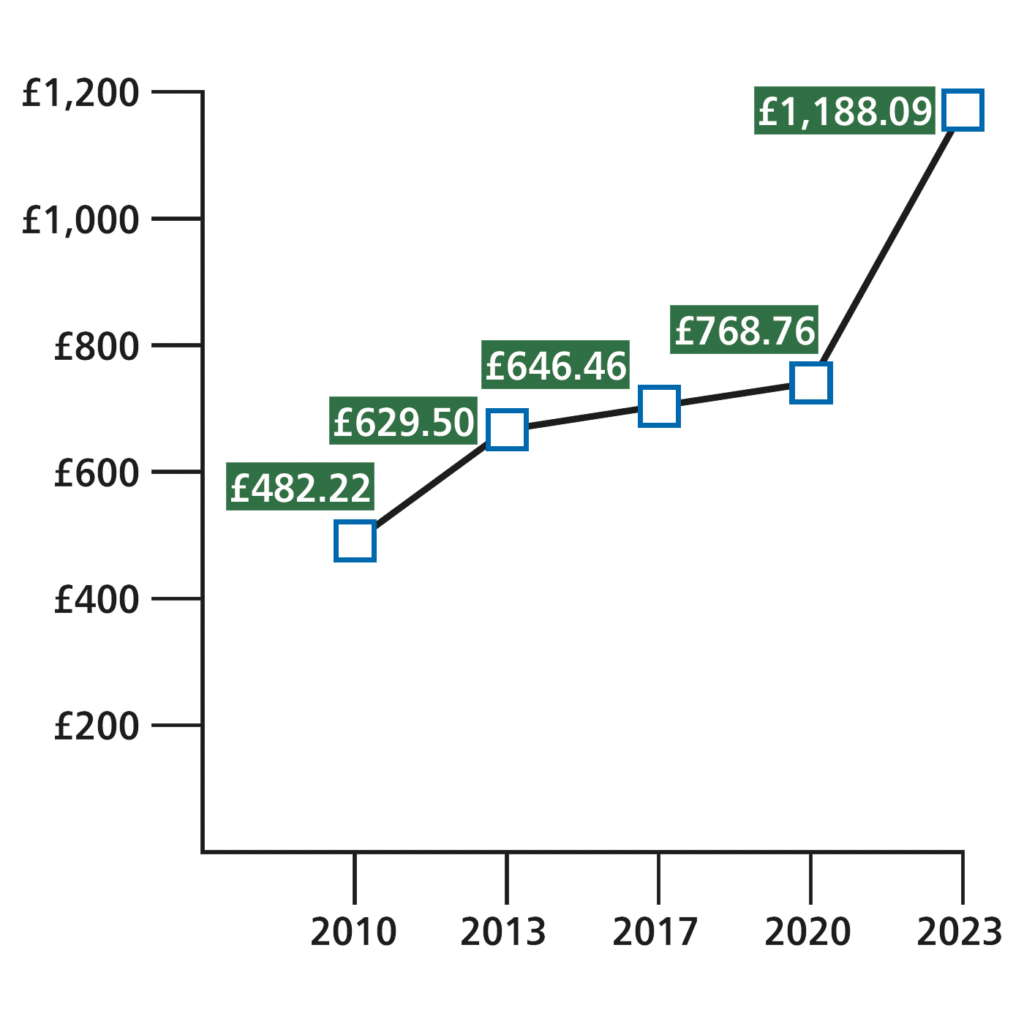
using 400W per hour
| YEAR | ENERGY PRICE | COST |
|---|---|---|
| 2010 | 13.8p/ kWh | £482.22 |
| 2013 | 17.9p/ kWh | £629.50 |
| 2017 | 18.5p/ kWh | £646.46 |
| 2020 | 22.0p/ kWh | £768.76 |
| 2023 | 34.0p/ kWh | £1,188.09 |
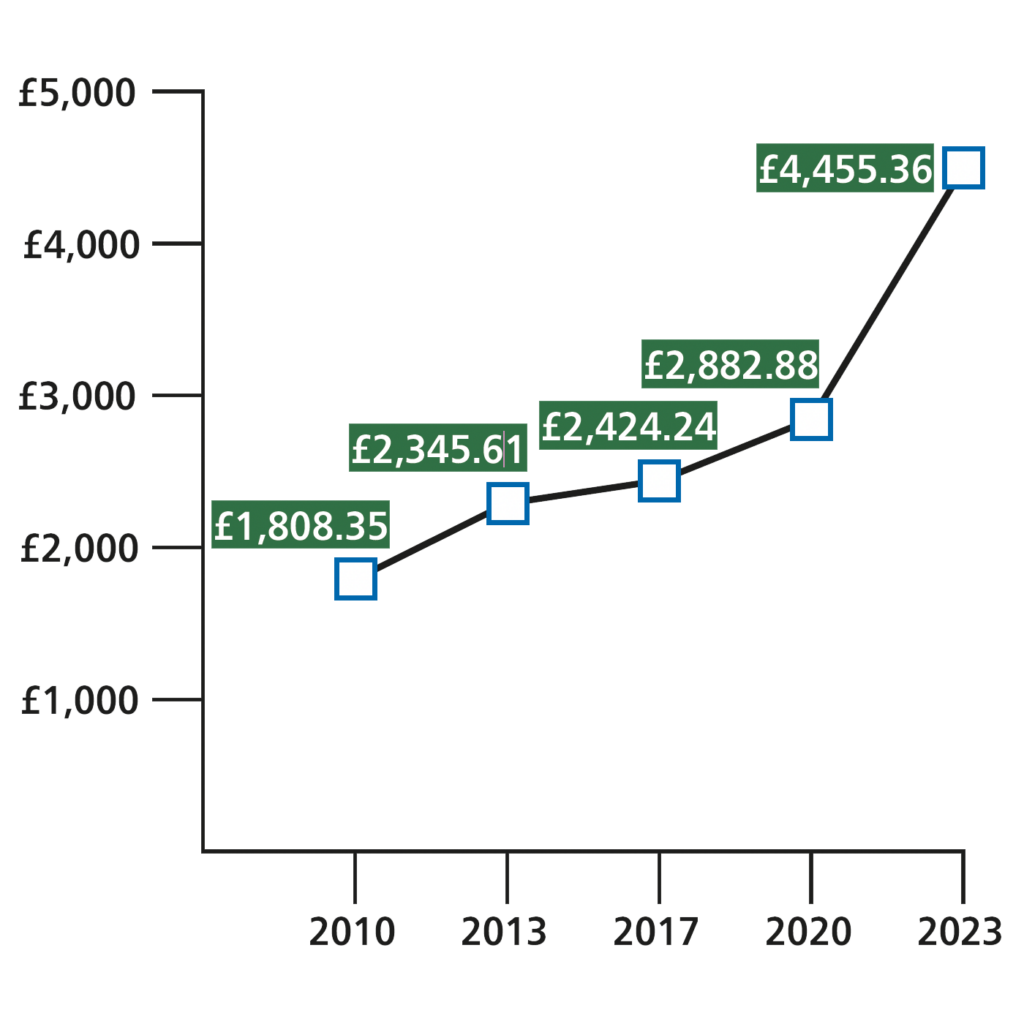
using 1500W per hour
| YEAR | ENERGY PRICE | COST |
|---|---|---|
| 2010 | 13.8p/ kWh | £1,808.35 |
| 2013 | 17.9p/ kWh | £2,345.61 |
| 2017 | 18.5p/ kWh | £2,424.24 |
| 2020 | 22.0p/ kWh | £2,882.88 |
| 2023 | 34.0p/ kWh | £4,455.36 |
Problems can arise when prudent planning has failed to take place; this is usually at the juncture where a
maturing animal moves to an adult enclosure from the juvenile one. The power requirement to heat the much
larger volume to the same required temperatures can be considerably more. Consider that 1500W may not be enough to adequately heat and light a truly large enclosure for an adult turtle.
2.1 Heating
Heating must maintain both water temperature and basking areas. Water heaters should be protected from damage by the turtle. Water can require a considerable amount of energy to heat and keep heated.
2.2 Lighting
Lighting large enclosures is important for the enrichment of the species kept within. The issue here is that UVB radiation diminishes over distance. Therefore, given the height of a room or enclosure ceiling, this could mean multiple UVB sources being required to raise the basking area to the required level. The recommended UVI range for large turtles is variable depending upon natural habitat. The UVI should range across the enclosure from 0.0 at the cool end to 3, 4 or even 5 at the basking area. With the key being to drive UVB down onto the basking area, the use of high output bulbs such as mercury vapour lamps may be beneficial as they will outperform the distances achieved by conventional UV tubes. Although, admittedly the quality of light provided is not as high a quality as those from T5 tubes.
Full spectrum lighting, or those replicating daylight, are recommended for replicating a large turtles’ circadian rhythm. These will certainly be needed if real plants, bushes or trees are used within the enclosure.
Enclosures should ideally have a lighting gradient much the same as the thermal gradient. This will effectively provide a bright end and a dark end in the enclosure. Lighting should be concentrated around the heat sources (haul out and basking area). UVB radiation can only be absorbed by way of heat, so thermal and photo output should not be mismatched.
2.3 Insulation
Of particular importance in ex-situ enclosures, insulation will be essential to mitigate heat loss, create an even thermal gradient and limit power consumption. Power consumption could easily become unmanageable without considerable insulation to preserve the energy. Particle or foam board used for insulation should be covered by wood, stiff sheet plastic or sheet metal, potential owners would not want their turtle to ingest these insulation materials or introduce them to their body of water.
3.0 Financial and longevity implications
During the neonate and juvenile stages of a large turtle’s lifecycle, the associated costs in terms of space and energy consumption may appear comparable to those of more modest species. However, as these animals grow and attain body lengths exceeding 60cm, a significant escalation in spatial requirements, infrastructure and energy demand should be expected.
Potential owners must give careful consideration to the long-term impact on household finances. The costs associated with large aquatic systems extend beyond initial setup and include ongoing expenditure on heating, filtration, water, maintenance and feeding. These costs will increase as the animal matures and will not stabilise at a lower level.
At no point would it be acceptable for a potential owner to acquire a large turtle species with the intention of keeping it only through the early stages of its lifecycle. Companion animals are a long-term commitment, and in the case of large turtles, this commitment may extend across decades.
Specialist companion animal selling businesses should place strong emphasis on the changing requirements of these species as they grow. Prospective owners must take full responsibility for determining whether they are capable, both spatially and financially, of providing for such an animal over its entire lifespan.
‘Long-term’ does not fully capture the commitment required. Many species within scope are capable of outliving their owners, and it is entirely possible that responsibility for the animal will pass to future generations. The spatial, energy and feeding demands will not diminish over time; they will increase.
4.0 Health and safety
Large turtles present both physical and environmental risks. These must be assessed and managed appropriately.
4.1 Awareness in the enclosure
Care must be taken when carrying out any maintenance within or around the enclosure. The position of the animal should always be known prior to entering the enclosure or placing hands into the water. In deeper or visually obscured systems, keepers should take steps to confirm the animal’s location before proceeding.
Hands should not be placed into the water where the animal cannot be clearly seen or anticipated. Sudden movements or contact may trigger a defensive or feeding response.
Where possible, electrical supplies to equipment operating within the water should be isolated prior to working in or in contact with the body of water.
4.2 Feeding accidents
Some species within scope possess powerful jaws and fast, instinctive feeding responses. Feeding should always be carried out with care, using appropriate tools where necessary, and never by hand.
While the bite force of most species within scope may not be as formidable as that of the alligator snapping turtle, the risk of injury should not be underestimated. Even relatively moderate-sized specimens are capable of delivering deep lacerations which may require medical intervention. Injuries are most likely to occur where keepers become complacent, rush routine tasks, or take unnecessary shortcuts.
Feeding responses may be triggered by movement, vibration in the water, or the presence of hands within the enclosure. For this reason, hands should be kept well clear of the head at all times, particularly during feeding or when the animal is anticipating food.
The use of feeding tongs or other tools is strongly recommended to maintain distance between the keeper and the animal. Where practical, feeding should be undertaken in a controlled and consistent manner to reduce confusion between feeding and routine maintenance.
Prospective owners must understand that these animals are not passive and should be treated with respect at all times. Failure to do so significantly increases the likelihood of avoidable injury.
4.3 Hygiene and zoonotic disease
Large turtles, like all reptiles, may carry Salmonella bacteria as part of their natural gut flora without showing any signs of illness. This presents a potential zoonotic risk to humans, particularly where good hygiene practices are not followed.
The risk is not limited to direct handling of the animal. Water, filtration equipment, surfaces around the enclosure and any tools used during maintenance may all act as vectors for contamination.
For this reason, strict personal hygiene must be observed at all times when working with large turtles or their enclosures.
Hands should be thoroughly washed with soap and warm water immediately after any contact with the animal, enclosure water, furnishings or equipment. Hand sanitiser may be used as an additional measure but should not be considered a substitute for proper hand washing.
Food preparation areas must never be used for cleaning equipment or disposing of enclosure water. Dedicated cleaning equipment should be used wherever possible.
Particular care must be taken with vulnerable individuals, including young children, the elderly, pregnant women and those with compromised immune systems. These individuals should avoid direct contact with large turtles and their environments wherever possible.
Companion animal selling businesses should ensure that prospective owners are made fully aware of these risks and the importance of maintaining appropriate hygiene standards.
4.4 Electrical safety electrocution risk
The combination of electricity and large bodies of water presents a serious and potentially fatal risk if not managed correctly.
Large turtle systems rely on multiple electrical components, including heaters, pumps, filters and lighting systems. All of these operate in close proximity to, or direct contact with, water.
If equipment fails, is incorrectly installed, or becomes damaged, there is a risk that electrical current may enter the water. This presents a significant hazard to the keeper when carrying out routine maintenance or handling within the enclosure.
All electrical equipment must be installed to a high standard, with appropriate waterproofing, cable management and protection from damage by the animal. The use of residual current devices (RCDs) or equivalent safety cut-offs is strongly recommended to reduce the risk of serious injury.
Care should always be taken when placing hands into the water. Where possible, electrical equipment should be isolated before undertaking maintenance within the enclosure.
Prospective owners must understand that the scale of these systems increases the severity of potential incidents. What may be a minor issue in a small aquarium can become a life-threatening situation in a large, high-volume aquatic enclosure.
4.5 Young people
Young people should not undertake maintenance or handling of large turtles without close supervision. They should never be left alone with such animals or their enclosures.
The risks are not limited to bites or physical injury. Large aquatic systems present additional hazards, including deep water, reduced visibility and the potential for slips, loss of footing or lack of situational awareness around the enclosure. These factors may increase the risk of falls or, in extreme cases, drowning, particularly where large
Young people must be supervised at all times when in proximity to the enclosure and instructed clearly on safe behaviour. Particular care should be taken to ensure they do not place hands into the water unsupervised or make sudden movements that may provoke a defensive response from the animal.
As with all reptile species, strict hygiene must be observed. Young people should be carefully monitored to ensure they do not touch their face, mouth or eyes after contact with the animal, enclosure water or associated equipment, and that hands are thoroughly washed immediately afterwards.
4.6 Assistance
The movement of a large turtle presents a number of risks to both the keeper and the animal. As these species increase in size, their mass becomes considerable and their ability to resist handling increases. Removing a large turtle from the water is not comparable to handling smaller specimens and should not be undertaken without proper planning.
Care must be taken to support the full weight of the animal when lifting. Turtles should never be lifted by the limbs or tail. Instead, both hands should be placed securely on either side of the carapace, maintaining control of the animal while keeping fingers well clear of the head and forelimbs. (An exception applies to alligator snapping turtles (Macrochelys temminckii). Due to their large head and limited neck retraction, a secure grip should be taken on the carapace immediately behind the head to mitigate the risk of a serious bite. This does not apply to common snapping turtles, which should be handled as described above.) Surfaces should be non-slip, and the distance the animal is required to be moved should be kept to a minimum. Where possible, the use of containers, tubs or supportive platforms is preferable to carrying the animal over distance.
It should also be recognised that the likelihood of a bite increases significantly during handling and movement. Animals that are otherwise sedentary may become defensive when lifted from the water or restrained. Many species within scope possess powerful jaws and fast, reactive strikes, particularly when they feel insecure or are unable to retreat. Keepers should never assume that a large turtle will remain passive during handling.
For larger specimens, assistance from a second person may be required to maintain control and reduce the risk of injury. Prospective owners should be asked to consider how they would safely move the animal for enclosure maintenance, cleaning or veterinary transport, and whether they have access to suitable assistance when required.
4.7 Common health issues
The majority of health issues seen in captive freshwater turtles are directly linked to deficiencies in husbandry. Water quality, temperature control, diet and spatial provision are the primary drivers of long-term health outcomes.
Water quality related illness
Poor filtration and inadequate water changes are among the most common causes of disease. Elevated waste levels and bacterial loading may lead to skin infections, shell degradation and general decline in condition. Large aquatic systems can deteriorate rapidly if filtration is insufficient or fails.
Shell rot (ulcerative shell disease)
Often associated with persistently poor water quality, physical injury or a lack of appropriate basking opportunities. Affected areas may appear discoloured, soft or pitted. Without intervention this condition may progress and become systemic.
Respiratory infections
Typically caused by inadequate thermal gradients, low water temperatures or prolonged exposure to damp, cold conditions without the opportunity to properly thermoregulate. Signs may include lethargy, irregular buoyancy and nasal discharge.
Metabolic bone disease (MBD)
A consequence of inadequate UVB exposure, poor dietary balance or insufficient calcium. This condition leads to softening or deformity of the shell and skeletal structure and is irreversible once advanced.
Soft tissue infections and wounds
Bites, abrasions or damage from enclosure furnishings may become infected, particularly in systems with poor water quality. These injuries can deteriorate quickly if not addressed.
Parasitic burdens
Internal parasites may be present, particularly in imported or poorly sourced animals. These may impact growth, appetite and overall condition.
Obesity and poor body condition
Overfeeding and lack of adequate swimming space may result in obesity, which places strain on internal organs and reduce overall lifespan. Conversely, poor diet or competition may lead to malnourishment.
Buoyancy issues
Improper diet, gastrointestinal problems or infection may lead to abnormal buoyancy, preventing the animal from swimming or resting normally.
5.0 Specialist services
5.1 Specialist veterinary practices
Regardless of the species being sold, companion animal selling businesses should signpost local veterinary surgeons that are proficient and comfortable with the species being sold. As part of LAIA regulation, pet selling businesses should be registered with a local specialist veterinarian, so this vet is the obvious choice for the prospective keeper’s requirement.
In the event that the prospective owner has travelled a distance to be assessed, it is the prospective owner’s responsibility to prove they have identified a suitable and local veterinary practice.
5.2 Pet insurance
Pet insurance should be mentioned to a prospective owner, and they should understand what is and is not covered. Given the mass of large turtle species, the volume of items such as antibiotics should they be needed would cost considerably more than regular sized pet reptiles. It may therefore be pertinent to take out an insurance policy to help in the event of illness or injury occurring.
5.3 Microchipping
In the event of escape or theft, a micro-chipped large turtle can then be traced to their owner. This will also dissuade keepers from wild releasing their animals should their circumstances change. Having an animal micro-chipped is relatively low-cost and causes no long-term detriment for the animal. Micro-chipping their animal will also demonstrate a heightened level of responsibility when voluntarily undertaken by the owner.
6.0 FEEDING
6.1 Feeding intervals
Feeding frequency will depend on species and life stage. Overfeeding should be avoided, particularly if this is a sedentary species.
If businesses require further clarity about the assessment process, its purpose or any other issues please email Charles Thompson, Trade Delegate at: c.thompson@repta.org or contact us here.