
deleterious gene policy
Promoting Ethical, Responsible Herpetoculture
Introduction
The growth of reptile breeding in the UK has brought many benefits. A wider variety of species are now bred in captivity than ever before—including critically endangered species whose survival depends on sustainable captive populations.
A key feature of modern herpetoculture is the development of animals with unique appearances, known as morphs. These are often the result of selective breeding and can produce colour, pattern, or structural differences that many keepers find attractive. In most cases, such morphs pose no additional husbandry challenges and can live full, healthy lives. However, some morphs are associated with serious health issues and compromised welfare.
Why Problematic Morphs Are a Concern
Some genetically derived traits—known as deleterious genes—are linked to structural, neurological, metabolic, or physiological abnormalities. These issues can include:
- Poor coordination or inability to right themselves
- Neurological symptoms such as head wobble, including inner ear issues and vertigo.
- Metabolic issues where digestion and consumption of muscle mass is evidenced, seriously curtailing longevity
- Dermatological issues, such as diurnal scaleless species that are unable to filter UV-B radiation and thermoregulate correctly.
- Cancerous issues, where a gene is known to promote both benign and malignant tumour clusters on the animal, inevitably curtailing lifespan.
- Curtailed lifespan issues, where a gene being present almost guarantees that the animal will never enjoy the established average lifespan for the species.
- Fatal embryonic issues are not considered a moot point regarding deleterious gene discussion. Animals that either die mid development or immediately upon hatching or birth because of an inherited trait.
These conditions reduce the animal’s quality of life and in some cases cause chronic suffering or premature death. Given the wide availability of morphs that are both attractive and robust, there is no ethical justification for deliberately producing animals with known, avoidable health problems.
Understanding the Genetics
There are two main pathways through which harmful traits can emerge:
- Continuum (or line) breeding decisions – Selecting animals with specific exaggerated features and breeding them over successive generations to intensify that trait. While common in some mammal, bird and fish breeds, this can lead to anatomical extremes that impair function—such as the breathing and thermoregulatory issues seen in brachycephalic (short-skulled) dogs, cats and rabbits.
- Binary inheritance breeding decisions – Here, a specific mutation is either inherited or not. Many morphs rely on a binary choice by a breeder, as to whether to pass on the gene or not. Some genes may have no ill effects when present in a single copy (heterozygous form) but become harmful or even fatal when two copies are inherited (homozygous form). For example:
- Leatherback Bearded Dragons (single copy) are typically healthy.
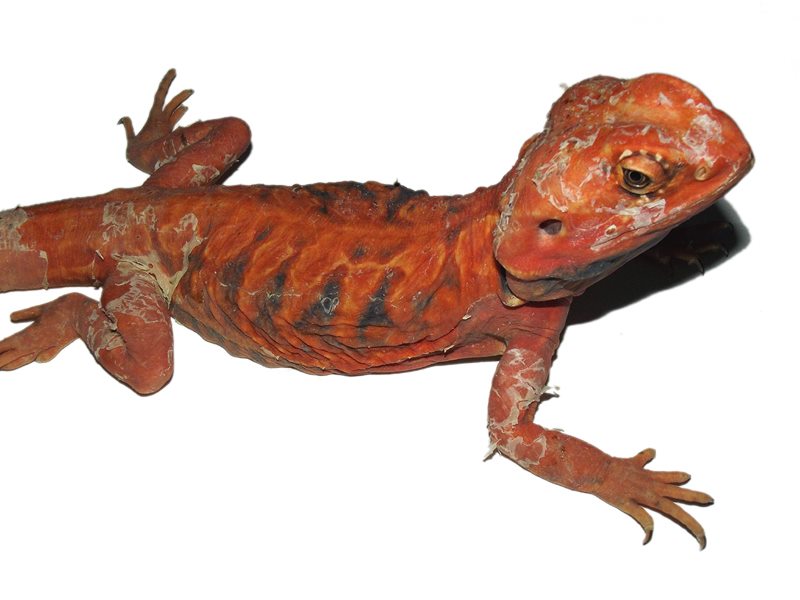
- Silk back Bearded Dragons (double copy) often suffer from severe skin fragility, thermoregulatory problems and an inability to filter UV-B adequately leading to severe desiccation of the skin.
REPTA’s Position
REPTA believes that knowingly producing animals with harmful genetic traits is not consistent with responsible or ethical reptile keeping. Self-regulation is essential if the sector is to maintain public trust and avoid external legislative restrictions.
REPTA therefore calls on its members not to breed, sell, or purchase any morphs or combinations known to cause significant welfare issues. This applies to reptiles sold in specialist pet centres and through commercial breeding.
The following morphs are prohibited for sale, breeding, or acquisition by REPTA members due to their association with serious health issues:
Prohibited Morphs
| Spider Royal Python (Python regius) | Genetically inherited inner ear anomaly that serious affects orientation and focus. Presents as moderate to severe wobble. |
| Super Champagne Royal Python (Python regius) | Lethal combination. Fatal embryonic issues. Others die within hours of birth. |
| Super Black Pastel Royal Python (Python regius) | High likelihood of underdeveloped lower jaw and kinking to spine and tail. |
| Super Cinnamon Royal Python (Python regius) | High likelihood of underdeveloped lower jaw and kinking to spine and tail. |
| Super Hidden Gene Woma Royal Python (Python regius) | Lethal combination. Fatal embryonic issues. Others die within hours of birth. |
| Champagne x Hidden Gene Woma Royal Python (Python regius) | Often presents with severe neurological issues. Both phenotypes have an allelic relation to the Spider morph. |
| Super Motley Boa (Boa imperator) | Metabolic issues, presents as normal at birth but quickly loses muscle tone and ability to pass faecal matter. Heavily curtailed lifespan. |
| Super Jungle Boa (Boa imperator) | Metabolic issues, poor digestion, poor muscle tone. Fertility issues, very few examples of reaching adult weight. Heavily curtailed lifespan |
| Jaguar Carpet Python (Morelia spilota ssp) | Neurological issues, including wobble and self-righting issues. Often compounded by a history of Jaguar-to-Jaguar breeding. |
| Skull Face Western / Plains Hognose (Heterodon nacius) | High likelihood of cranial (head) abnormalities, scalation issues, improper jaw alignment and ocular and nasal malformation. |
| Super Cappuccino Crested Gecko (Correlophus ciliatus) | High likelihood of cranial (head) abnormalities, spinal deformities, incomplete limb development, nasal malformation and dermatological issues. |
| Super Lilly White Crested Gecko (Correlophus ciliatus) | High likelihood of cranial (head) abnormalities, spinal deformities, incomplete limb development, nasal malformation and dermatological issues. |
| Enigma Leopard Gecko (Eublepharis macularius) | Neurological issues, affecting balance, coordination and general cognitive function. |
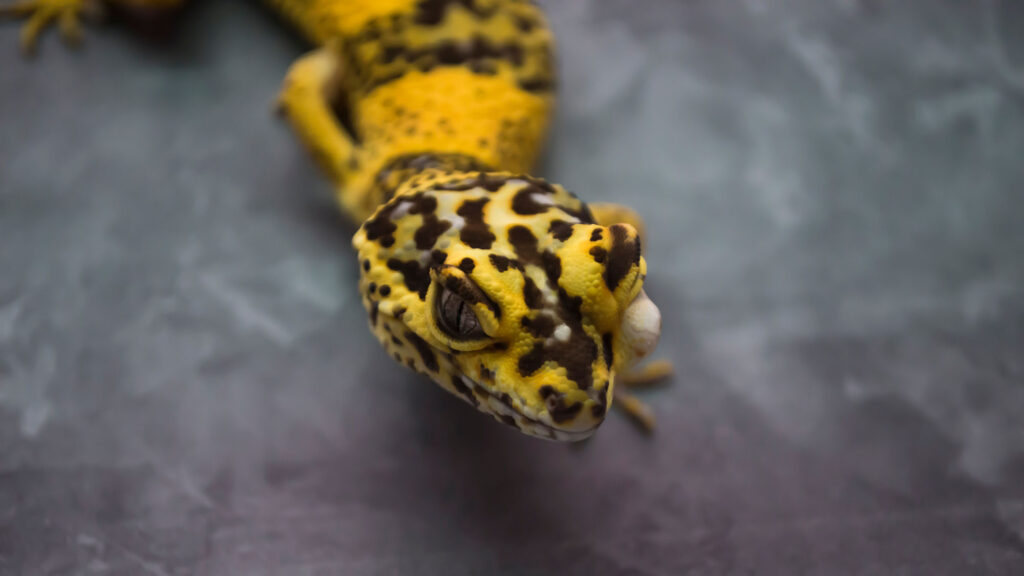
| Lemon frost Leopard Geckos (Eublepharis macularius) | Cancer issues, associated with a high likelihood of developing skin tumours known as iridophoromas. |
| Super White out African Fat Tail Gecko (Hemitheconyx caudicinctus) | Lethal combination. Fatal embryonic issues. Others die within hours of birth. |
| Silk Back Bearded Dragon (Pogona vitticeps) | Dermatological issues. Highly delicate skin prone to flaking. Inability to filter UV-B radiation. Prone to cuts, scrapes and infection. Prone to burns and dehydration. |
Risky Combinations
Some morphs are stable on their own but can result in harmful traits when paired with other allelic (related by a common allele) variants. The following combinations should be avoided:
- Spider × Champagne Royal Python (neurological issues)
- Spider × Hidden Gene Woma Royal Python (neurological issues)
- Super Spot Nose Royal Python (Often severe neurological issues, likely future inclusion)
Genes under scrutiny
The following morphs have been cited as having potential problems associated with them, but evidence is currently lacking to justify their inclusion within the policy. We request keeper/breeder testimony (either positive or negative) regarding the following. Please contact us.
- Red Monster Bearded Dragon (Pogona vitticeps)
- Scoria Boa (Boa imperator)
Guidance and Best Practice
Breeders and sellers must take proactive steps to educate buyers about the risks associated with certain morph combinations. Where stable morphs carry a risk of producing harmful offspring when bred to similar lines, written guidance should be issued to the buyer, and a signed copy retained as proof of advice given.
REPTA encourages all breeders to adopt a quality-over-quantity mindset: to pair only the strongest and healthiest animals, and to focus on producing reptiles that can enjoy long, unimpeded lives.
Review and Updates
This list will be reviewed every six months. As evidence emerges, more morphs may be added in pragmatic and manageable stages. Decisions taken are usually based upon a groundswell of social license regarding a particular morph and its associated issues. There is a paucity of scientific research regarding deleterious genes, and it is hoped that by flagging species that have a publicly acknowledged inherited issue this may prompt further research into this area.
Deleterious Gene Submission
If you believe we are missing a deleterious gene animal from our listings, please submit the following information for consideration.
"*" indicates required fields
Endorsements Of This Policy
Veterinary Organisations
The British Veterinary Zoological Society (BVZS) is a specialist division of the British Veterinary Association representing veterinarians working with exotic, zoo, wildlife, and non-traditional companion animals. It promotes high standards in zoological medicine through education, research, professional development, and advocacy for animal welfare across all managed and wild species.
Association of Zoo & Exotic Veterinary Nurses (AZEVN) is a not-for-profit association that is run by Veterinary Nurses for Veterinary Nurses and is focused solely on the Zoo & Exotic VN Sector.
The AZEVN has three main aims:
- To facilitate the exchange of information and networking between RVN’s to help promote and maintain the highest standard of veterinary nursing within Zoo & Exotic institutions.
- To facilitate excellence through education for Zoo & Exotic Veterinary Nurses across the UK, whilst prioritising animal health and welfare.
- To provide the highest level of current and professional education to RVN’s working with zoo species, exotics or wildlife through unique and affordable CPD opportunities.
Professional Animal Care Organisations
UK Animal Care Technicians (UKACT) is a professional membership organisation for individuals working in animal care education and management. It promotes excellence in animal welfare, provides professional development and networking opportunities, and supports best practice within educational and practical settings to enhance standards across the animal care and management sector.
Pet Sector Advisory Organisations
The Companion Animal Sector Council (CASC) is a UK advisory body uniting organisations from across the pet industry, veterinary profession, and animal welfare sectors. It advises government on companion animal policy, regulation, and welfare, promoting evidence-based decision-making, responsible ownership, and collaboration between stakeholders to support high standards in animal care.
International Reptile Advocacy Organisations & Societies
Created in Vienna in April 1990, the European Pet Organization (EPO) is the European organization protecting and promoting the interests of the European pet sector.
EPO Mission is:
- To promote and encourage the welfare of kept and traded pet animals;
- To represent and promote the interests of the European pet industry and enhance its reputation;
- To represent the agreed positions of EPO members in discussions with the European Parliament, Council and Commission, with representatives of EU Member States, and in international negotiations;
- To share relevant information about the pet trade amongst affiliated associations;
- To build our membership base broadly across Europe to include other trade associations, including through facilitation and support of the development of trade associations in European countries without one;
- To support the development of a legislative and policy framework across Europe and internationally that facilitates business opportunities.
In January 1985, nine clubs or associations met in Cologne and founded the BNA. This was the first time that a nature and species conservation association was created, which primarily accommodates breeders and keepers of animals and plants.
BNA’s main areas of work:
- As an umbrella organisation, the BNA bundles the concerns of its member organisations and represents them in the federal states, in Berlin and in Brussels.
- However, the BNA, like all other nature conservation associations, is also committed to active nature, animal and species protection. He is of the opinion that biotope protection must be given priority.
- However, the BNA also considers the breeding of endangered species to be an indispensable way of conserving the species. If species are extinct in their natural environment, their population can only be secured through conservation breeding. In order to achieve this goal, we need the help and cooperation of the many animal and plant keepers and breeders in our sub-associations.
Reptile Advocacy Organisations & Societies
Important sister organisations of REPTA. These organisations interact directly with government, advisory organisations, breeders and hobbyists alike. They undertake their own advocacy of herpetoculture providing education, publication, support and the galvanising of the keeper community. Domestic reptile owners are actively encouraged to seek out membership of such organisations to ensure their future contribution to UK reptile advocacy.